

Door Dash Driver Gives His Shoes to Shoeless Patient at Cox Branson - Ozarks Independent |
- Door Dash Driver Gives His Shoes to Shoeless Patient at Cox Branson - Ozarks Independent
- Freed of London Handcrafts New Line of Children's Glitter Dance Shoes - PRNewswire
- Boden's new sparkly shoes are a must-have for Christmas - goodhousekeeping.com
- Empty shoes remember N.J. traffic crash victims (PHOTOS) - NJ.com
- Is Brazil’s famous shoe industry finally reawakening? - Vogue Business
| Door Dash Driver Gives His Shoes to Shoeless Patient at Cox Branson - Ozarks Independent Posted: 16 Nov 2020 03:54 AM PST A Door Dash dasher delivered a super-sized act of kindness when they noticed someone standing in the cold without shoes. Security at Cox Medical Center Branson noticed that someone was walking up to a patient who had just been released from the emergency room and was waiting for a ride. The patient did not have any shoes on in the November cold. Security watched as the man said something to the patient, and then took the shoes off his feet and gave them to the patient. He then walked back to his vehicle with a Door Dash sign and left. Cox Branson staff went to the internet to find their mystery dasher, and tracked down a man named Todd. "If an opportunity presents itself, we should all strive to be a blessing to others…even if that means literally giving someone the shoes off your feet," Todd told the hospital staff when they reached out to him. Todd credited his mom, saying that she "raised him right."  |
| Freed of London Handcrafts New Line of Children's Glitter Dance Shoes - PRNewswire Posted: 16 Nov 2020 07:15 AM PST SAN LUIS OBISPO, Calif., Nov. 16, 2020 /PRNewswire/ -- Dreamy Dancers (www.dreamydancers.com), a California-based glitter dance shoe company, are now available on Amazon. Handcrafted by the iconic Freed of London, the UK-based company that creates and manufactures professional level dance shoes since 1929, Dreamy Dancers are infused with the perfect blend of glam and function to support little feet and growing bodies. 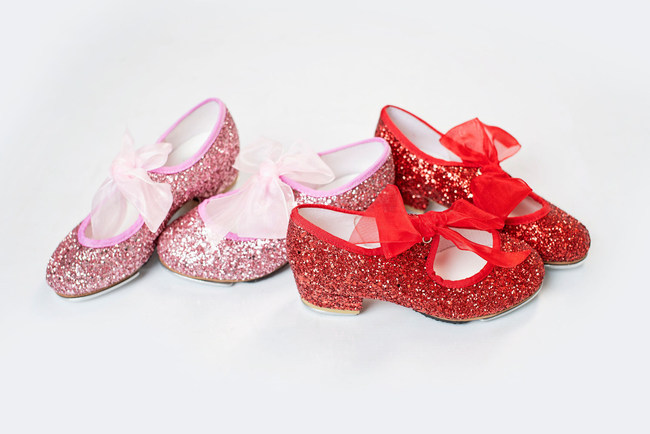 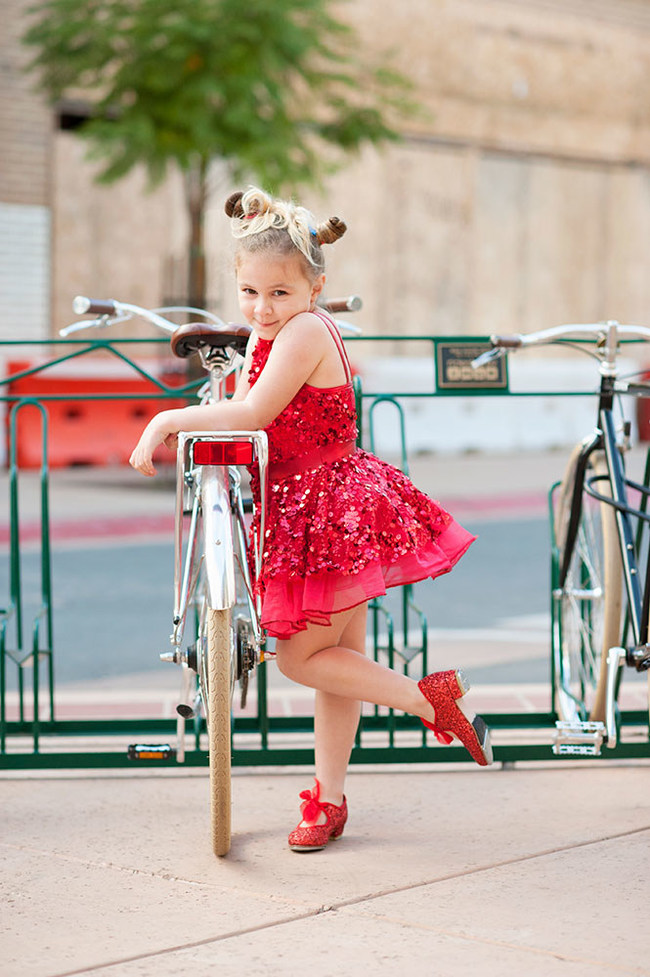 The idea for Dreamy Dancers was born when company founder, Brooke Gutierrez, searched for 'glitter dance shoes' for her daughter, but could not find a single pair that had both style and support. "I realized there's a huge gap in the market for fancy, fun, and functional dance shoes," Gutierrez said. "I created a sequin tap shoe prototype for my daughter and the next thing I knew, all the girls in her dance class were begging for a pair." The latest glitter dance shoe collection is available on Amazon in Tap or Jazz in four shades of sparkling glitter. The variety of colors enables kids to showcase their style in class and gives dance teachers many opportunities to perfectly pair them with any dance competition costume. Plus, the glitter is immovable; Gutierrez and Freed of London chose an application technique that ensures it stays on the shoe without fallout. "Our collection is a stark contrast to what's currently available," says Gutierrez. "Existing brands currently provide marginal quality dance shoes in limited colors of basic ballet pink, black and tan, which many dancers, including my daughter, are simply not excited about." Each Dreamy Dancers shoe is designed in the heart of California's Central Coast and made skillfully by hand in the United Kingdom by the iconic dance company, Freed of London. Pricing
Colors
Sizes
Shipping Images & Videos Notes to editors Contact: Brooke Gutierrez, Dreamy Dancers SOURCE Dreamy Dancers   |
| Boden's new sparkly shoes are a must-have for Christmas - goodhousekeeping.com Posted: 16 Nov 2020 03:14 AM PST British fashion brand Boden is now selling sparkly shoes that are a must-have for Christmas, even if you're just dancing around your kitchen. Christmas might look a little different this year, with no office parities or big gatherings with friends, but if you're still keen to get into the festive spirit and add some sparkle to your December, a pair of twinkling sequin shoes are a sure-fire way to do just that. Boden's Antonia Slingbacks are available in classic navy sequin and statement pink sequin, both featuring black velvet bows. This content is imported from Instagram. You may be able to find the same content in another format, or you may be able to find more information, at their web site. Set to elevate any outfit, the kitten heel slingbacks cost £140 and are available in sizes 36 to 42. The brand posted a picture of the must-haves on Instagram, and fashion fans took to the comment section to share their love for the new shoes.  Boden "Absolutely beautiful... such a tough choice! But blue 💙! ✨," one fan wrote, while another added: "So fabulous 👏" A third follower wrote: "These are amazing! 🤩 Can't choose between them!" The fashion brand is selling a full range of fun partywear this year, from velvet Christmas day dresses to statement shirts. So whether you're hoping to host this Christmas or planning virtual drinks with your nearest and dearest, there's something for every occasion. See more of our favourites below.     Like this article? Sign up to our newsletter to get more articles like this delivered straight to your inbox. In need of some positivity or not able to make it to the shops? Enjoy Good Housekeeping delivered directly to your door every month! Subscribe to Good Housekeeping magazine now. This content is created and maintained by a third party, and imported onto this page to help users provide their email addresses. You may be able to find more information about this and similar content at piano.io  |
| Empty shoes remember N.J. traffic crash victims (PHOTOS) - NJ.com Posted: 15 Nov 2020 02:00 PM PST  The shoes, 100 pairs in all, spoke volumes in their silence. The empty shoes represented one-sixth of the approximately 600 people in New Jersey killed annually in traffic crashes. Advocates of Vision Zero, an ambitious plan aimed at eliminating all traffic-related deaths in New Jersey by 2030, gathered in Metuchen on Sunday to commemorate World Day of Remembrance for Road Traffic Victims. About one-third of those killed are adults and children walking or riding their bikes, according to the Nikhil Badlani Foundation. Wendy Kukowski was among the speakers at the 11 a.m. ceremony. She discussed losing her life partner, Oscar Zanoni, 44, who was riding an electric bicycle in Edison Jan. 2 when he was struck and killed by a tractor-trailer. "On that day, Oscar became a statistic. He was one of the state's 600 New Jersey and and 40,000 Americans who die on our roadways each year due to preventable traffic violence. But Oscar is, and always will be, much more than a statistic. He's the love of my life, my soulmate, a 'doggy dad,' a son, a brother and a friend," Kukowski said. Kate O'Connor spoke of losing her brother, Jimmy, two years after he was struck coming home from work by someone she described as a "speeding, distracted driver." Her brother sustained a traumatic brain injury and was unable to walk, talk or eat on his own. Jimmy was 27 when he died. "He was my best friend. He was supposed to walk me down the aisle. He would have done anything in the world for me, and he would have been the best dad. And I had to watch him die," O'Connor told the gathering. "My family was helpless, and it continues to destroy us, seven years later," O'Connor said. Sangeeta Badlani is founder of the Nikhil Badlani Foundation, named in memory of her 11-year-old son, Nikhil. She was the first speaker at Sunday's ceremony. "We believe the only acceptable number of people who die on New Jersey roads is zero. That number today, year after year, is nearly 600. Look at the 100 shoes here. Imagine six times as many people who didn't make it home," she said at the ceremony. "This is an issue that can impact anyone," she said when reached by phone afterward. In June 2011, Nikhil was in the back seat of a car, wearing a seat belt, being driven home by his father, when he died in a 3-car crash in South Orange precipitated by a driver who went through a stop sign. Badlani told NJ Advance Media that the driver was issued two summonses, for reckless driving and not stopping at a stop sign, and paid $206 in fines. In speaking with groups, she said she discusses "what Nik would've been like, how we don't get to hug him." "That's when people realize it could very well happen to them," she said. Please subscribe now and support the local journalism YOU rely on and trust. Ed Murray may be reached at emurray@njadvancemedia.com. Follow him on Twitter @EdMurrayPhoto Rob Jennings may be reached at rjennings@njadvancemedia.com. Follow him on Twitter @RobJenningsNJ  |
| Is Brazil’s famous shoe industry finally reawakening? - Vogue Business Posted: 15 Nov 2020 09:40 PM PST Italy has dominated luxury shoe manufacturing for decades. But in recent years, Brazil has started to show signs of establishing its own foothold in this market. In 2015, Beyoncé favourite Alexandre Birman, the country's most famous luxury shoe brand, opened a factory in Vale dos Sinos to address demand for its high-end heels after revenue almost doubled to 9 million reais ($1.7 million) the previous year. A year later, New York-based NVH Studios started manufacturing in Brazil under three labels, including Twins for Peace luxury sneakers sold exclusively in France. More recently, several foreign companies, including Marc Jacobs, have enquired about producing shoes in Brazil. These companies have been encouraged by the country's success to create a more business-friendly environment through reforms of its fiscal and labour practices and a favourable currency exchange that makes it cheaper for them to manufacture and export shoes. "We're starting to see international interest in production in Brazil," said Brazilian luxe brand Alexandre Birman's global head Milena Penteado. "I see the business environment improving, there's a ton of potential." In 2019, Brazil's government approved pension reform, including upping the retirement age by nine years, and took concrete steps toward privatisation, including the postal service and electric company, set to go to action in 2021. The state also granted dozens of airport and electricity distribution concessions to private companies and divested of units within giant companies like Petrobras, which led to an increase in foreign investment. Brazil's weak infrastructure makes logistics a nightmare, and its meddling in public companies, such as artificially keeping the price of oil below market, has cost the country greatly. Imagery from Alexandre Birman's Spring/Summer 2021 collection. © Alexandre Birman  Meanwhile, the volatile Brazilian currency, the real, has fallen sharply against the dollar over the past 16 months, making it cheaper to manufacture and export goods. The real is now trading about 5.75 to a US dollar compared to less than 4 reais last July. "The currency at the rate it is now makes our products competitive," said Haroldo Ferreira, president of the Brazilian Footwear Industries Association, known as Abicalçados. Ferreira adds: "Thanks to the currency being weaker, exports could increase a bit, but it's more than that." Pandemic-related problemsTo be sure, the coronavirus was a setback for Brazil's economy as it was elsewhere. Foreigners have pulled more than $18 billion out of the country so far this year. Exports of footwear have fallen 35 per cent through August. In its second quarter, Alexandre Birman, a unit of publicly traded Arezzo & Co., posted revenue of 4.7 million reais ($876,000), a 51 per cent decrease from a year earlier and a stark contrast to its 2019 fourth quarter, the last purely pre-pandemic period, when revenues grew 19 per cent. The unit posted revenue of 57 million reais ($10.6 million) in 2019. Over the last 10 months, NVH Studios's revenue has fallen 70 per cent in its Brazilian market as the privately held company closed its factories and stores for four months. Manufacturers face chronic, longer-term issues as well. Brazil ranked 124 among 190 economies in ease of doing business, according to the World Bank's 2019 annual rankings. The rankings weigh the regulatory environment and ease of starting and operating a business. The country is ranked 184 out of 189 countries in ease of paying taxes, according to a 2020 PwC report. Businesses require about 1,500 hours on average each year to comply with taxes in Brazil, the most of any tracked. That total includes hours of labour, the number of taxes to be filed and the complexity of the system. Bolivia ranked second, with an average total of 1,025 hours, and Venezuela third, with an average of 920 hours. The real's volatility can also create problems, Ferreira says. "When a company puts in an order, it's not for today, but often as much as six months from now," he says. For example, a $100,000 order placed on 2 January of this year, when the real was at its weakest, would equate to 402,360 reais locally. Just five months later, when the currency hit its high for the year, that order had jumped to almost 589,000 reais ($110,000). "Companies need margins of security. This is the big problem and this is where we lose international competitiveness," Ferreira said. The association cannot control the currency exchange rate, but it lobbies for better conditions for companies. "We're doing a lot of internal work here among the associations to increase exports," he says.
Brazil's emergence as a shoe power is the latest episode in a more than century-old saga. Brazil has manufactured shoes since 1900, thanks to German and Italian immigrants who settled in Rio Grande do Sul, a state that borders Argentina and Uruguay and is known for its beautiful scenery. Within seven years, there were 699 factories operating in the region, according to Claudia Schemes, a researcher and professor at the Feevale University in the city of Novo Hamburgo. At one point, during a lull in Italy's luxury shoe dominance in the 1970s and 80s, Brazil would even briefly export shoes to Europe, although the industry struggled to remain competitive. The country started producing and exporting cheaper shoes for a time in the 1990s, but lost out to China's emerging industry. Still, the culture and infrastructure of shoemaking became well established. "Everyone there breathes shoes," said Penteado, who co-founded Alexandre Birman, with the company's namesake. A shoe familyAlexandre Birman grew up on the factory floor of his father's shoe manufacturing business, widely known as the brand Arezzo. He and Penteado started their Alexandre Birman brand in 2008 as an international name, not a Brazilian one. Bergdorf Goodman was its first customer, and remains among its best. For its first six years, the company depended on Italian factories for production. But in 2015, it invested 3 million reais (about $900,000 then) to build a factory modelled after Italian facilities. It also sent local Brazilian artisans to Italy to learn from master craftsmen there. The investment paid off quickly. With lower costs, margins jumped. And whereas in Italy, the lead time was some six months, it now takes two months for Alexandre Birman to produce a pair of shoes. The secret? The company controls the process from start to finish and can rely on local talent and raw materials. It also benefits from being part of Arezzo, which sells shoes of all kinds via different brands and provides back office support, leaving Penteado and others free to focus on the business's creative end. Such accommodation has helped Alexandre Birman survive "custo Brasil", or the Brazilian cost, which describes the difficulty of doing business in the country. The Alexandre Birman store in Pátio Batel shopping mall in Curitiba, Brazil. © Alexandre Birman  NVH Studios is the brainchild of Kisha Hunter and Nana Baffour, who in 2016 invested in three brands manufactured in Brazil. Zeferino, a favourite of Brazilian-born supermodel Gisele Bündchen, and Vinicius Dapper produce high-end shoes for women and men. Hunter and Baffour said in an email that they "believe in the power of high-quality craftsmanship, a hallmark of traditional Brazilian shoemaking". They added that "their shoes target consumers with a differentiated sense of style and quality", and that "with the current exchange rate… post-Covid, their company will be positioned for the export market". Both Birman and NVH have been encouraged by recent signs. Shoe sales in Brazil have been increasing, and are at about 80 per cent of where they were a year ago at Alexandre Birman. "We started already noticing that the market is step by step recovering," says NVH managing director Nino Pereira. Both companies have plans to grow their businesses overseas in 2021. Alexandre Birman, which already has a store each in Miami and New York, will look to build its business there but Penteado says that the company also has plans "to conquer Europe and then go to Asia". She adds: "We're ambitious here." Pereira says NVH will also look to increase sales in the US and Europe, although "initially via wholesale markets", before deciding "whether it makes sense to open stores". He says the company's "big goal will be internationalisation". Whether other foreigners decide to establish a factory and try to navigate the improved but still highly complex Brazilian business environment remains to be seen. Ferreira, head of the footwear association, said he has fielded calls from companies, including Marc Jacobs, interested in turning to Brazil. Marc Jacobs declined to comment for this story. "We're working on reducing the 'Brazil cost'," Ferreira said. "There is opportunity here." To receive the Vogue Business newsletter, sign up here. Comments, questions or feedback? Email us at feedback@voguebusiness.com. Understanding luxury in Brazil Italy's luxury manufacturing faces crisis as government delays help European fashion poised to win big in historic trade deal  |
| You are subscribed to email updates from "shoes" - Google News. To stop receiving these emails, you may unsubscribe now. | Email delivery powered by Google |
| Google, 1600 Amphitheatre Parkway, Mountain View, CA 94043, United States | |

0 Yorumlar